TL;DR
A hay shed keeps bales dry and lets heat and moisture escape. Size it from your bale type and stack height, not floor area alone. Leave airflow gaps between stacks, set the eave height above the stack plus loader reach, and keep hay apart from machinery and fuel. Bale within the safe moisture range: 12 to 14% for large squares, 14 to 16% for large rounds.
Hay is the biggest feed bill on many South West WA farms, and the easiest to lose. Rain, sun and heat all take a share when bales sit outside.
A well-designed hay shed stops that loss. This guide covers how to size it, how to lay it out and what to get right before the frame goes up.
Why store hay under a roof?
Bales stored outside lose feed value from the outside in. Over half the weight of a 2 m round bale sits in its outer 30 cm, and that is the layer that weathers first.
Wet stacks also carry a fire risk. Dairy Australia guidance notes that most hay fires occur in large square bale stacks, and that rain soaking between bales has caused spontaneous combustion. Read the Dairy Australia advice on baled hay and rain.
Open-front or enclosed hay shed: which one do you need?
Both work. The right one depends on the hay you store, how long you hold it and how exposed the site is.
| Type | Best for | What it does well | Watch out for |
|---|---|---|---|
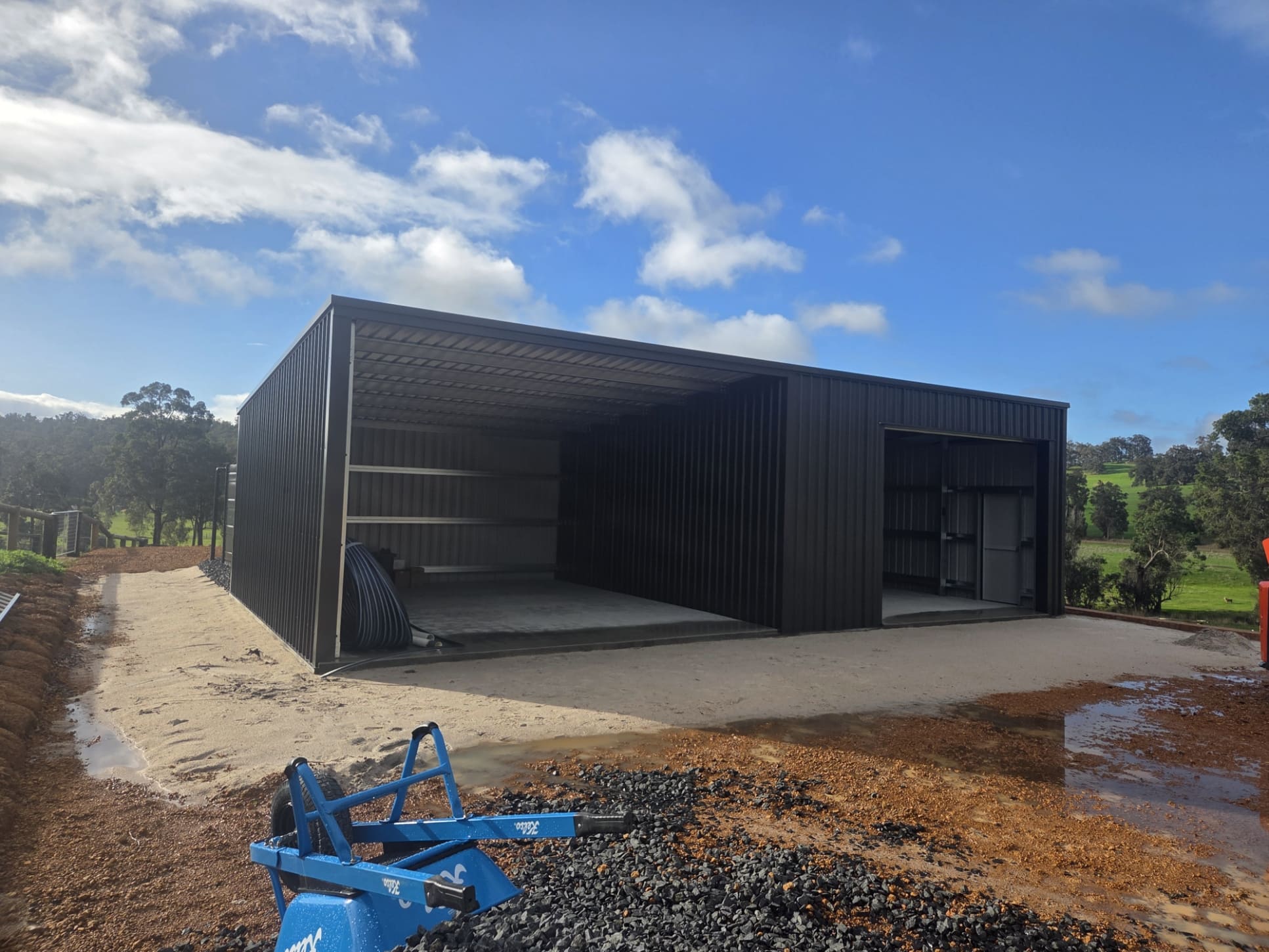
| Open-front hay shed | Working farms moving a lot of bales | Easy loader access and strong natural airflow | Driven winter rain, so the open side must face away from the weather |
| Enclosed hay shed | Premium hay, long storage and exposed sites | Full protection from rain, dust and sun | Needs designed ventilation so heat and moisture can leave |
| Hay bay or lean-to on another shed | Smaller operations adding storage | Extra covered space without a new frame | Hay next to machinery or fuel raises the fire risk |
Westspan builds all three. See our hay sheds and agricultural sheds.
How much hay will a shed hold?
Start with the bale, not the shed. Bale volume sets how many fit and how high you stack.
Round bale, 1.2 m diameter by 1.2 m wide: about 1.4 m³
Round bale, 1.5 m diameter by 1.2 m wide: about 2.1 m³
Large square, 2.4 m by 1.2 m by 0.9 m (8 x 4 x 3 ft): about 2.7 m³
Volumes are approximate. Check the dimensions your baler produces.
Example: a 12 m by 10 m bay holds about 40 large squares per layer when they lie flat. Stacked four high, that is about 160 bales and a stack height near 3.6 m, before aisles and airflow gaps.
Work through it in this order:
- Count the bales you store in a normal season, then add a buffer for a poor year.
- Pick your bale type and size, and the machine that will handle it.
- Convert bales to stack footprint and height.
- Add aisles for the loader and gaps for airflow.
- Set the eave height above the stack, then add the mast or boom reach of your loader.
For general sizing, see our guide to the right farm shed size. Send us your bale type and annual tonnage and we will size the shed for you.
How do you stop hay heating in a shed?
Hay keeps curing after it is baled, and that releases heat and moisture. A shed has to let both out.
Moisture at baling matters most. Agriculture Victoria gives these safe ranges:
| Bale type | Recommended moisture at baling |
|---|---|
| Small square | 16 to 18% |
| Large round | 14 to 16% |
| Large square | 12 to 14% |
| Export hay | Under 12% |
Source: Agriculture Victoria.
The shed handles the rest. Four design features do most of the work:
- Ridge vent: lets warm, moist air leave at the top of the roof.
- Low air inlets: open sides, gaps under cladding or vents feed fresh air in.
- Gaps between stacks and walls: air needs a path through the hay, not just around it.
- A raised, drained pad: bales sitting on damp ground take up moisture from below.
Cross-section: air enters low, rises through the gap between stacks and leaves at the ridge.
Rain adds risk even in a shed. Agriculture Victoria advises checking stacks from one week after heavy rain for dampness on bale tops and moisture building on roofing iron.
Roof gutters and downpipes need sizing for the full roof catchment. They must carry runoff away from the stack base.
Can hay and machinery share a shed?
They can, but a hay fire in a shared shed takes the machinery with it. Keep fuel, batteries and workshop tools out of the hay bay.
Separate bays reduce the risk of a fire spreading. Talk to us about bay layout and any fire separation your insurer or shire requires. See our farm machinery sheds for the other side of that layout.
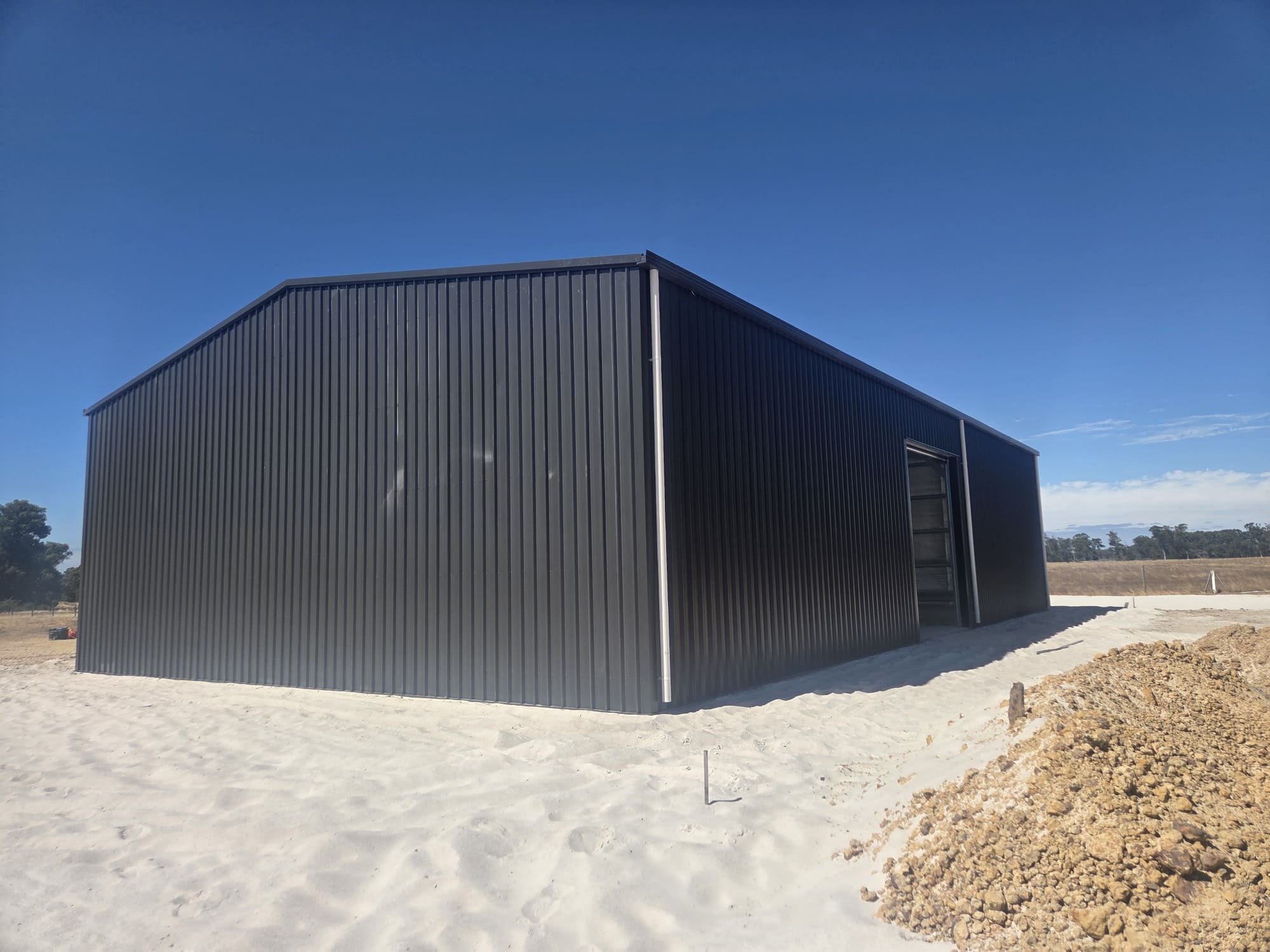
What shapes the quote for a hay shed?
Every Westspan hay shed is custom, so the quote follows your design and your site. These factors drive it:
- Span, length and number of bays
- Eave height and stack height
- Open sides or enclosed walls and doors
- Pad or floor, and the drainage around it
- Wind region, engineering and site slope
- Access for deliveries and for the loader
For context, see our page on farm shed prices in the South West. Finance is available for the build, so the shed you need does not depend on one season’s cash flow.
Roof, floor and siting
A gable roof with a ridge vent suits most hay sheds because it gives the volume and the exit path for warm air. Our guide to farm shed roof types explains the options.
Concrete suits high-traffic enclosed sheds. A compacted, drained pad suits many open hay bays. See flooring options for sheds.
Leave clear access around the shed for delivery trucks and firefighting. Position the open side away from winter weather, which in South West WA comes from the west and south-west.
Approvals and bushfire
Only very small sheds are exempt from a building permit in WA. A hay shed that holds a season of bales is well past that.
Zoning, setbacks and bushfire rating all affect where it can go. Start with the largest shed without council approval, development and planning approval for sheds in Busselton and building a shed in a bushfire-prone area.
Westspan handles the engineering and approval documentation as part of every build.
Common mistakes when building a hay shed
- Sizing for this year’s bales instead of a poor-year buffer
- Ignoring stack height, then finding the loader cannot reach the top layer
- Packing bales tight to the walls with no airflow gap
- No ridge vent or low air inlets
- Storing hay beside machinery, fuel or the workshop
- Leaving bales on ground that stays damp
For more, read mistakes to avoid when building an agricultural shed. Running stock too? See our livestock shelter guide.
What Westspan builds for hay storage
Westspan designs, preps the site, supplies and installs hay sheds, machinery sheds, dairy sheds and livestock shelters. It is one point of contact from first sketch to final bolt.
Every build is ShedSafe certified and uses Colorbond and B&D Australia materials.
We build across Busselton, Margaret River, Bunbury and the wider South West.
Hay shed questions
How big should a hay shed be?
Size it from your bale type, annual tonnage and stack height. Add aisles for the loader and gaps for airflow, then set the eave height above the stack plus loader reach.
How many bales fit in a hay shed?
A 12 m by 10 m bay holds about 40 large squares per layer and about 160 stacked four high, before aisles and airflow gaps. Round bales fit fewer per layer because of their shape.
What moisture should hay be before storing it?
Agriculture Victoria recommends 12 to 14% for large squares, 14 to 16% for large rounds and 16 to 18% for small squares. Hay baled above these ranges can heat and lose feed value.
Can hay catch fire in a shed?
Yes. Hay baled too wet, or soaked by heavy rain, can heat and ignite on its own. Ventilation, a drained pad and checking stacks after heavy rain reduce the risk.
Should a hay shed be open or enclosed?
Open-front sheds suit working farms that move a lot of hay. Enclosed sheds suit premium hay and long storage, and need designed ventilation.
Do I need council approval for a hay shed?
Anything above WA’s small-shed exemption needs a building permit. Westspan handles the engineering and approval paperwork as part of the build.
Planning a hay shed?
Tell us your bale type, how much hay you store and what the site looks like. We handle design, site prep, supply and ShedSafe-certified installation.